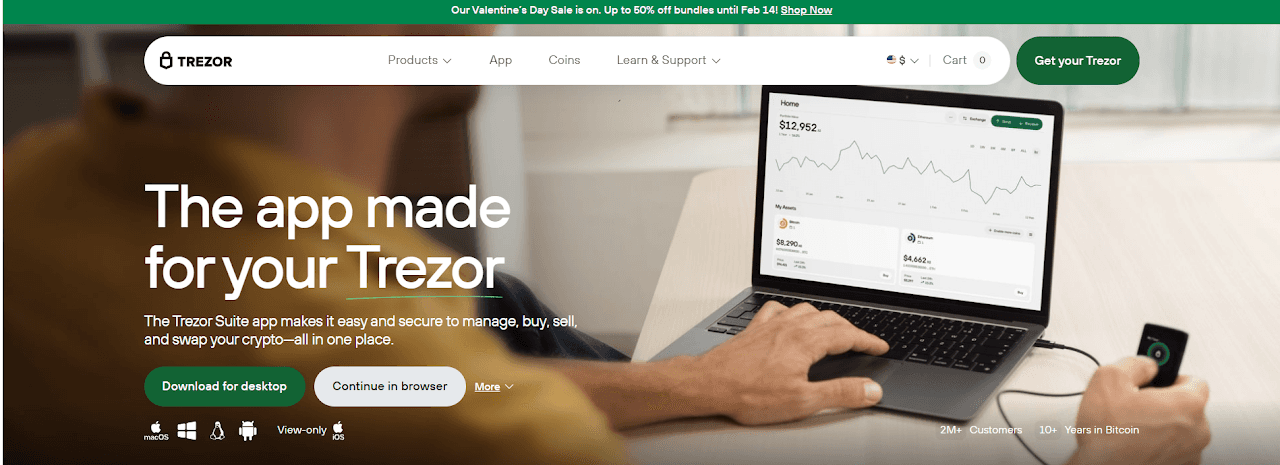
Trezor.io/Start — Secure Hardware Wallet Setup Guide
Setting up your Trezor wallet correctly is the most important step in securing your cryptocurrency. This guide walks you through the entire process, from unboxing your device to creating secure backups and using Trezor Suite. Follow each section carefully and take your time. Crypto security begins with proper setup and safe storage practices.
What Is Trezor?
Trezor is a hardware wallet designed to keep your private keys offline and protected from hacking attempts. Unlike mobile or web wallets, Trezor stores sensitive information in an isolated physical device, making it significantly harder for attackers to steal your crypto. Even if your computer is infected with malware, your funds remain safe as long as your Trezor and recovery seed are protected.
The main benefit of using Trezor is control. You own your keys, you control your assets, and no centralized service can freeze your funds. Whether you're holding Bitcoin, Ethereum, or hundreds of other assets, Trezor gives you a secure and user-friendly solution.
Before You Begin — What You Need
Before starting the setup process, make sure you have:
Your Trezor hardware wallet (Model One or Model T)
The original USB cable
A laptop or desktop computer with an updated browser
A stable internet connection
A pen or permanent marker
A private space with no cameras watching
Do not rush through the setup. Preparation is part of your security. Most mistakes occur when users try to finish too quickly or skip the backup step.
Step 1 — Connect to the Official Start Page
Open your browser and manually type:
trezor.io/start
Always type this address directly instead of clicking unknown links. Phishing sites often imitate official pages, especially in crypto. Double-check the URL before proceeding.
Once you arrive on the start page, you will see setup instructions for your specific Trezor model and links to download the official software. Follow the prompts that match your device.
Step 2 — Download and Install Trezor Suite
Trezor Suite is the official application used to manage your wallet, send and receive crypto, check balances, and update firmware. It is available for Windows, macOS, and Linux.
When installing the software:
Download only from the official source.
Avoid extensions or browser plug-ins claiming to be "Trezor tools."
Do not install anything from third-party stores or repositories.
After installation, launch Trezor Suite and connect your device with the USB cable.
Step 3 — Install Firmware (If Requested)
On first use, Trezor typically requires firmware installation. Firmware is internal software that runs your device securely.
Confirm the update on both the computer and the device screen.
Do not unplug the device during installation.
Only install firmware when prompted by Trezor Suite.
If you ever see random pop-ups asking for firmware outside of Trezor Suite, close the browser immediately. That is often a phishing attempt.
Step 4 — Create a New Wallet
Once firmware is installed, you will see two options:
Create new wallet
Recover wallet
Select Create new wallet if this is your first time using Trezor.
The device will automatically generate cryptographic keys offline and create your master wallet. No one — not even Trezor —ever sees your keys or has access to your funds.
Step 5 — Write Down Your Recovery Seed
This is the most important part of your setup.
A recovery seed is a set of 12, 18, or 24 secret words shown only once on your device screen. Write these words carefully on the provided recovery card or on a secure medium such as metal plates.
Important rules:
Never take a photo of your recovery seed
Never store it in cloud storage
Never type it on a computer or mobile device
Never share it with anyone
If your device is lost, damaged, or stolen, the recovery seed is the only way to restore your wallet.
Treat it like the keys to your entire crypto portfolio.
Step 6 — Confirm Seed on the Device
Trezor will ask you to confirm specific words in random order. This ensures you recorded the recovery seed accurately. If the words do not match, stop immediately and start over.
Do not proceed until you are 100% certain the words are correct, in the right order, and readable later.
Step 7 — Set a PIN Code
Your PIN protects the device physically. Without it, someone could plug your Trezor into a computer and attempt unauthorized access.
Tips for choosing a strong PIN:
Avoid patterns like 1234 or 1111
Use the maximum number of digits allowed
Do not write it near the device
Remember: the PIN protects your device, while the recovery seed protects your crypto. Both are necessary.
Step 8 — Optional: Enable Passphrase
A passphrase acts as an extra security layer, sometimes called the “25th word.” It creates an entirely new wallet derived from the same recovery seed.
Only enable a passphrase if you can store it safely and separately.
If you lose the passphrase, that wallet is permanently inaccessible.
This feature is recommended for advanced users, not beginners.
Step 9 — Open Trezor Suite and Begin Using Your Wallet
Once setup is complete, Trezor Suite will open your dashboard. From here, you can:
Add accounts (Bitcoin, Ethereum, etc.)
Check balances
Generate receiving addresses
Send and sign transactions
Manage security settings
Update firmware when needed
Always verify addresses directly on the Trezor device screen before confirming a transaction.
Security Best Practices
Keeping your crypto secure is an ongoing responsibility. Follow these high-priority safety rules:
Never Share Your Recovery Seed
No employee, support member, or official service should ever ask for it. If anyone does, it is a scam.
Do Not Store Seed Digitally
Phones and computers can be hacked. Paper and metal backups cannot be hacked remotely.
Verify Everything on Device Screen
The device screen is secure. Your computer screen is not.
Perform a Test Transaction
Send a small amount of crypto first before transferring large amounts.
Troubleshooting and Tips
Device Not Recognized
Try a different USB cable
Try another USB port
Restart Trezor Suite
Lost PIN but Still Have Seed
You can recover your wallet on a new device using the recovery seed.
Lost Seed
Unfortunately, funds cannot be restored without the seed. Keep multiple secure backups in separate locations.
Final Setup Checklist
Print or copy this checklist and confirm each step is done:
Downloaded Trezor Suite from official website
Installed firmware directly on the device
Created a new wallet (not recovery wallet)
Wrote down recovery seed offline
Confirmed seed on-device
Set a strong PIN
Stored seed in a safe, hidden location
Performed a test transaction
Conclusion
Setting up your Trezor hardware wallet correctly ensures long-term protection for your digital assets. The most critical factors are securing your recovery seed, verifying addresses on the device screen, and using only official software. Once set up properly, Trezor offers a powerful, user-friendly, and secure solution for managing cryptocurrency. Spend time securing your seed, and you can enjoy peace of mind knowing your crypto is under your control.